
Why the Workshops Had to Happen
I dreamt up the idea for the Workshops, having felt for some time in my Great Scenic Journeys business that the transport sector needs to do more to help generate reasons to travel and work with tourism providers. There are examples of excellent work being undertaken by the Destination Marketing Organisations in places across the UK, so it would be wrong of me to suggest it isn’t happening, but it still feels patchy and also sometimes doesn’t involve those who can make a difference in some of the transport organisations. Furthermore, conversations don’t tend to look at the psychological reasons people aren’t going out and what can be done collaboratively to try and address these.
Bringing “In It Together for 2026” to Life
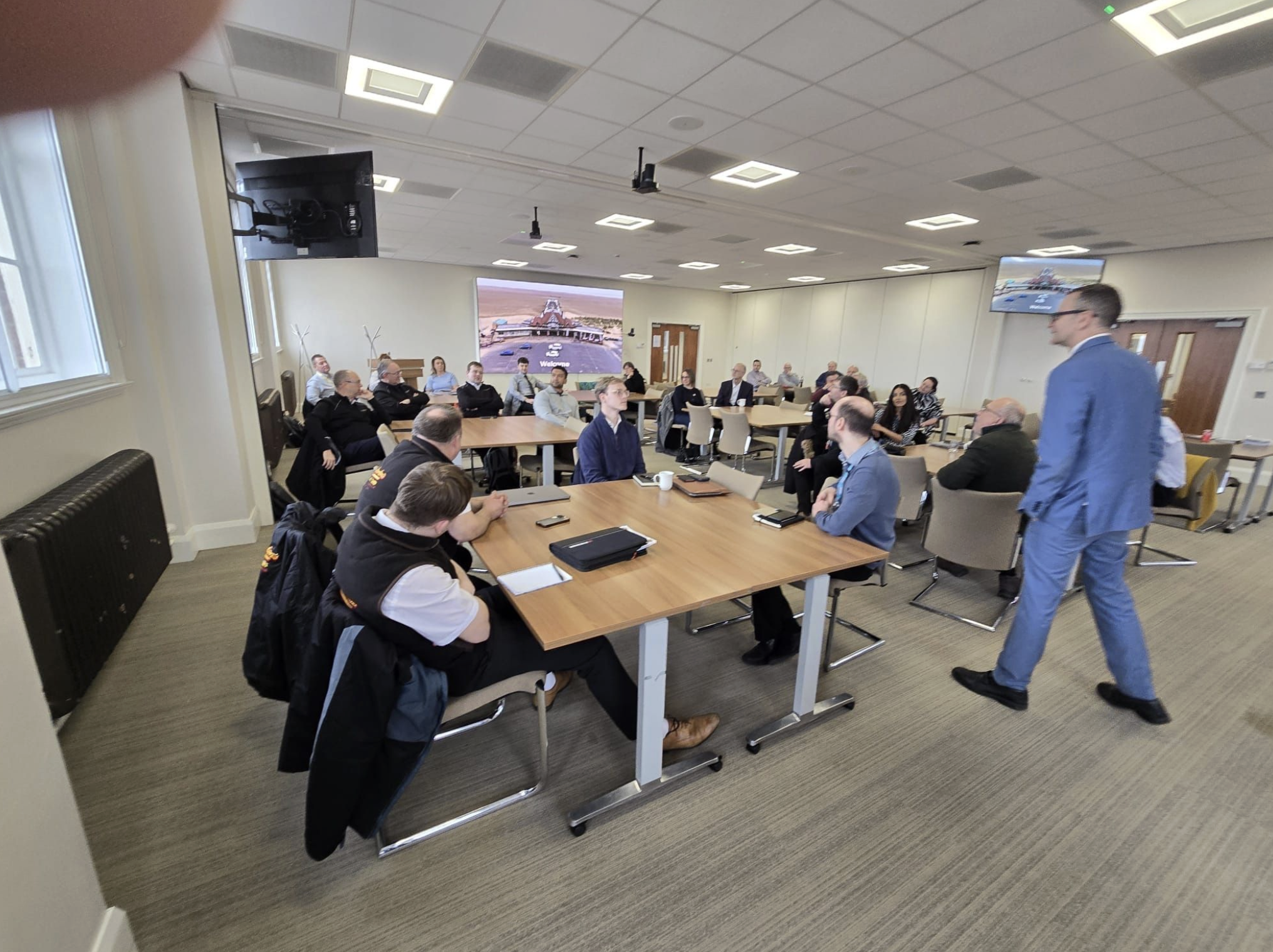
So, at Great Scenic Journeys, we got together firstly with Lancashire County Council for a workshop in Preston their delightful top floor auditorium a couple of weeks ago and then with York and North Yorkshire Council at the fabulous Impossible York Wonderbar and Team Rooms last Friday. We called these sessions ‘In it Together for 2026’ – okay you may say that sounds naff, but my creative juices couldn’t conjure anything better up!
If you’ve ever tried to organise an event, which I’m sure you have, it needs patience, persistence and the ability to take knockbacks and don’t take them personally. None of these are attributes that I am remotely good at and so it has been a roller-coaster of emotions over the last 2-3 months. We made them ‘Invitation Only’ and limiting to around 25-30 – the intention was that they would be ‘seminars’ or ‘workshops’ rather than conferences – the ability to network but also discuss and develop plans, rather than a series of one-way, self-congratulatory presentations. However, we did realise the benefit of speakers, but confined these to brief talks, almost speed-dating style.
Scepticism, Surprise and Strong Turnout
Persuading people to attend wasn’t as hard as I thought, albeit a couple of the big owning groups were wondering what it was all about and there was scepticism that it would turn into an event just to promote my business ‘from an oily salesman in Surrey’ (in the words of one such organisation). However, the turnout was brilliant – 30 in Lancashire and 27 in Yorkshire with only one ‘blow out’ on the day! The transport operators turned out in force, and I must particularly thank Northern, LNER, Avanti, TransPennine and Grand Central for their attendance as I am sure they thought in advance the slant would be very much bus and coach related. I have criticised train companies as not being as engaged as they should around working with other modes, but my experiences of the last two weeks, were hugely encouraging. Their contribution to the discussions on both days was uplifting and immense – as was those from everyone.
What We Learned About Changing Travel Behaviour
So, what did we learn? Well on both days we found out more around the societal changes that are making it harder to persuade people to go out – much of which I’ve discussed on these pages previously, but we heard it from the tourism sector and attractions. We discovered more around the popularity of single travelling and detox style experiences – indeed the word ‘experience’ came up frequently – people want this more and more now and they want authentic, curated and quirky trips out. We’ve 700k Instagram followers across our various social media accounts at Great Scenic Journeys and of course as we learnt from the delegates at our workshops, the digital aspect is all consuming – attractions, in particular are reliant on identifying quirky content that differentiates themselves in a crowded market and also most notably among those overseas – something that the train operators concurred with – China being a captive audience.
There was an agreement among all present at both workshops that their roles have gone beyond just merely delivering a proposition to customers, but now they need to be almost sociologists, understanding trends in detail but trying to get their heads round what is needed to overcome the first obstacle, an unwillingness among whole swathes of the population of even venturing out.
Public Transport as a Health Intervention
At the Lancashire Workshop, there was a real desire from attendees to work with Great Scenic Journeys and other stakeholders on infiltrating medical practices, charity shops, community groups and welfare institutions and promote the benefits of a leisure journey by bus, coach or train in terms of mental health and general wellbeing. We would display in surgeries and the like, details of the nearest Great Scenic Journey and those further afield, along with itinerant packages, suggestions for things to see and do and discounts at community providers. Graham Vidler, Confederation Passenger Transport Chief Executive, even went as far as suggesting that on prescriptions issued for patients, there should be advice on making a leisure trip on public transport! Love it!
The discussion around the health benefits of a trip out by public transport included the role of coach excursions. The coach operators spoke an ageing market that, unless there is a significant multi-faceted marketing intervention, poses an existential threat to the sector. There’s a need for those approaching retirement to be made aware of the pleasures, convenience, mental and physical health benefits that can be enjoyed by a coach excursion, almost as a lifestyle choice. There’s also a defeatist danger in assuming that the younger end of the market is non-addressable and that they won’t enjoy a trip out on a coach, whereas with some targeted digital promotion and possibly celebrity endorsers or ‘brand heroes’, there is potential to generate untapped demand.
A “Park Run” for Public Transport?
In keeping with the ‘In it Together’ mantra of the workshops, mutual help can be provided by each sector to achieve the common goal of getting bums on seats and ultimately increase visitor numbers to destinations. I’ve always had a vision of creating a ‘Park Run’ equivalent for public transport. The joy of a ‘Park Run’ is that across the country, it creates in effect an ‘event’ designed for everyone every Saturday morning. I have a mate who literally every week asks, ‘What has Park Run got in store for me this week?’ – he’s not the fittest around, nor even the most sociable, but the Park Run concept provides engagement, accessibility (no one ever finishes last), is manageable (5k maximum) and it’s at the heart of communities. I’d love a situation where transport companies lay out each Saturday a Great Scenic Journey for customers. We discussed this at the Lancashire Workshop and there was a consensus for a bus or rail operator to do this in conjunction with coach operators. So, for instance, the bus or train would host you for a section of the trip and then the coach would meet customers to then take them on a tour, maybe of a City, or to the more remote parts beyond.
Social Mobility and Subsidised Travel
There was a feeling that government subsidies, potential through the BSIP fund allocations, could maybe be used to help create social mobility where it doesn’t exist. One tourism attendee at the Lancashire Workshop provided insights from the education sector of deprived communities in Burnley where whole swathes of young pupils have never seen the seaside. Imagine the ‘win win’ scenario, of providing children with the opportunity of managed day trip to Blackpool, not just on the kids themselves, but also the coach sector and indeed the economy in Fylde, including attractions. Across the UK, there will be countless communities where youngsters and indeed many in adulthood have not enjoyed the joys of a trip to the seaside, or seen beautiful countryside or enjoyed the sights, history and experiences of our wonderful cities. Subsidised and free travel, on city sightseeing tours or on excursions can potentially change lives and they need not be that costly, in the overall scheme of welfare funding.
Rail, Bus and Coach: A Two-Way Opportunity
The train companies hold the key for bus and coach. With such a nationwide, indeed global reach, as well as depth of marketing expertise and spending power (relative to other transport modes), they can have a massive impact in promoting ‘add-on’ travel to other destinations that they don’t serve and also promote attractions. In our Yorkshire Workshop, there was a real appetite from the bus and coach operators to offer discounts to rail customers, be it, for example, on the City Sightseeing York, service or on our multi-operator Scenic Explorer product across the Region, or through integrating with coach excursions. Of course, the benefits of this are that, if embraced by the train companies (and why wouldn’t they?), then they can be promoted on their websites, as part of their rewards schemes and to their huge databases.
There’s also an opportunity for the bus and coach sector to help rail companies. It always troubles me when I hang round pubs in somewhat deprived places off the beaten track in the UK, how many people say they have never, for instance, been to London or other locations served by longer distance rail services. For many, they just don’t perceive that a journey beyond the confines of their own region is something that applies to them and is beyond their means, either because it is price prohibitive, or they have misconceptions around it being inconvenient. On buses and in the communities of Bridlington, Filey, Scarborough and many more, there’s an opportunity to introduce travel to London, Newcastle, Edinburgh and other great destinations through integrated and discounted pricing and a more connected end-to-end experience. This is where bus and coach can help rail, just as, it was agreed, the rail industry can, instead of just focusing on well-known locations on their network, can help drive travel to often deprived, but hidden gem locations further beyond by bus or coach, through itinerant packages and destination marketing. Adding places to the UK rail timetable and ticketing systems that don’t currently have a railway station but are accessible by a connected bus service (anyone for Rawtenstall?), would also be helpful, so too, it was felt, rebranding ‘Plus Bus’ so that it is more visible and part of the transport vocabulary. There was unanimous agreement to look to extend our Scenic Explorer Day out and staycation product to other counties and ramp up the provision of discounts at independent attractions, cafes and other community providers as part of our Great Scenic Rewards scheme and also provide a discount for rail customers (in return for them marketing the pass to their customers).
Delivering the Experience (Not Just the Transport)
Finally, once this marketing lark has been mastered, there’s a job to be then done in providing a compelling proposition in keeping with the expectations of the anticipant and excited leisure customers venturing on a trip out. Attention to detail is everything and Avanti has been working with ourselves, bus and taxi operators to identify and progress practical, ‘quick wins’ to achieve a more integrated experience, so too other rail companies have been embarking on their own schemes.
Challenges exist though in terms of anti-social behaviour and noisy or unruly customers with their phones blaring, ruining the experience for others’, however fab the view from the window or the destination. There were some interesting insights from the attractions around how the jocular and versatile nature of their own staff helps nip in the bud instances where some customers might be impacting the enjoyment of others’. Indeed, it seemed like there was a lot to be learned from the tourism sector, around customer service per se. My advice always to open top bus companies, coach excursion providers or indeed anyone providing a leisure route, is that if they approach the design and delivery of their implementation with a bus, coach or rail mentality, then they will fail. They must be fixated on delivering an ‘experience’ that just happens to involve something on wheels. They are in the entertainment business, it should all be about delighting every single customer, creating a sense of occasion, a branded personality and memorable, impactful encounter, with the driver or host almost acting as a protagonist in the adventure, sharing the heightening excitement felt by customers. The tourism providers at our workshops spoke engagingly and helpfully to transport colleagues about their obsession with customer service and creating a high octane, fun experience.
The Role of Local Authorities
Franchising, BSIP funding and greater control over the specification of services have all created a shift in power across the bus industry. From my experience, the civil servants are keen to listen, learn and engage constructively. They don’t profess to being marketing experts, despite increased onus on them finding ways to drive patronage up. Their active involvement not just in our workshops, but in my dealings with other regional authorities and their desire to solicit and commit to develop ideas from those present was a real positive. No big time charlies or show boaters there.
Why I’m Genuinely Excited
I genuinely was nervous about how the past fortnight would go and whilst our two events might seem quite small, simple and insignificant in the overall machinations of the public transport and tourism sectors in the UK, I was filled with hope. I am really grateful for all those who attended and for their active engagement and contribution and for showing a real willingness to meet up more regularly and keep our collaboration and deliver the actions that we discussed. To be honest, I’m underselling how I feel right now with this description. If truth be told I don’t think I’ve felt so excited in ages!